The Architectural Legacy of the Oil Barons
How the “Paris of the Caucasus” was built The Oil Fever in Baku Baku, the capital of Azerbaijan, is one of the most architecturally diverse



How the “Paris of the Caucasus” was built The Oil Fever in Baku Baku, the capital of Azerbaijan, is one of the most architecturally diverse
How the “Paris of the Caucasus” was built The Oil Fever in Baku Baku, the capital of Azerbaijan, is one of the most architecturally diverse
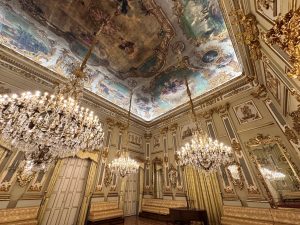
Civic Culture and the Architectural Self-Representation of a City The Urban Bourgeoisie of Murcia Murcia, a city in southern Spain, was founded in the ninth
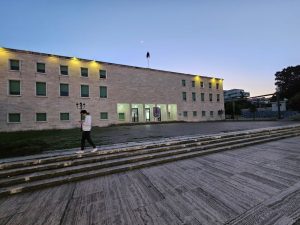
Italy played a significant role in the creation of an independent Albanian state at the dawn of the 20th century. So, it came as no surprise that, by the end of World War I, having already secured its place among the major powers

In the mid-1930s, faced with the strengthening of totalitarian regimes on the old continent, a whole constellation of top European intellectuals moved to America and sought work at the universities there. Among them, a group of mathematicians and physicists with extremely unusual intellectual abilities caused a particularly great interest.

Italy was a very exciting place to live in the sixteenth century. The Renaissance released all the magnificent human intellectual potential and the ideal of the Renaissance man was formed for whom there are no intellectual limitations.

Of course, today’s visitors to Dubai are primarily amazed by the glamorous luxury that the city offers. There is nothing wrong with that. In such circumstances, it is easy to forget that until a few decades ago it was a city of humble fishermen and divers for pearls from the bottom of the Persian Gulf.

The Great Fire of Smyrna At the turn of the twentieth century, Smyrna, a bustling port city on the Aegean Sea, stood as a beacon
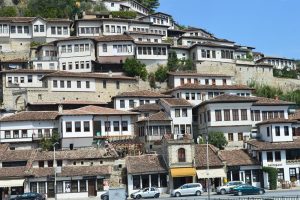
When the Balkan peoples began to break away from the Ottoman Empire and form their own nation-states, the preservation of the Ottoman architectural heritage was their last concern. In their desire to appear as modern as possible, the newly formed states adopted Central European cultural models, so public buildings from the Ottoman period were either demolished or neglected and left to decay.
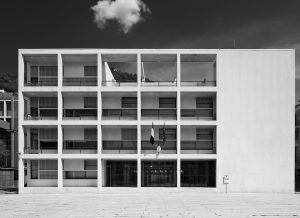
At the turn of the twentieth century, various philosophical and political ideas were popular in the circles of a new generation of young European intellectuals. There were those who advocated a merciless class struggle, others had in mind the unification of their own nation, and still others were particularly attracted to the concept of a “superman”.
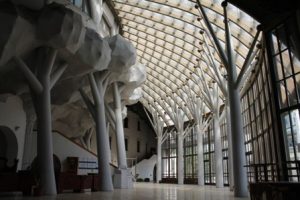
In the second half of the nineteenth century, after the reconstruction of the Habsburg Empire, Hungary entered the most successful period of its history. The architecture was particularly successful, and in that period the unified Budapest got a look that, despite all the later misfortunes, ensures it to this day the status of one of the most beautiful cities in the world.
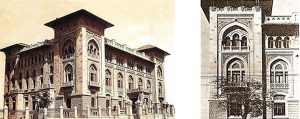
After the Great War, the last act of disintegration of the Ottoman Empire took place. Once the world’s greatest power was exposed to the merciless dismemberment of its territory. The complete collapse was prevented by the republican army of Mustafa Kemal Atatürk, which successfully opposed the imperial power, foreign occupiers and Greek rebels.